
Why Singapore Retail Chains Are Switching to Unified IoT & AI Platforms in 2026

In 2026, the Singapore retailers that are winning are no longer buying point solutions — they are adopting unified platforms that combine IoT connectivity and AI shopper intelligence into a single managed stack. The reason is simple: operating a 10, 50, or 500-store chain with separate vendors for networking, cameras, POS connectivity, and analytics is operationally unsustainable. When each system has its own dashboard, its own alerting mechanism, and its own support contract, IT teams spend more time managing tools than improving store performance.
A unified retail intelligence platform consolidates every connected device — POS terminals, xTrack Dome cameras, digital signage, temperature sensors, and 5G failover routers — under a single Vortex Cloud dashboard. The result is measurable from the first month: 90% fewer network-related incidents, 80% reduction in IT truck rolls, and 15–25% conversion rate improvements from AI-driven shopper analytics. For a mid-sized Singapore retail chain, these numbers translate to six-figure annual savings and a competitive edge that fragmented IT stacks simply cannot match.
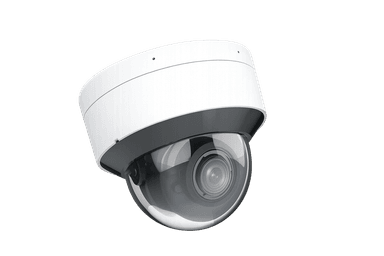
xTrack Dome
Edge AI shopper intelligence with 99%+ counting accuracy and privacy-safe processing
Learn More →### Why Are Singapore Retailers Moving Away from Fragmented IT Systems?
The traditional retail IT model in Singapore — and across APAC — has been to source connectivity, security cameras, point-of-sale systems, and analytics tools from different vendors. A typical chain might use one ISP for broadband, a separate vendor for CCTV, another for POS hardware, and yet another for foot traffic analytics. Each system operates independently, with no shared data layer and no unified management interface.
This fragmentation creates three critical problems that grow exponentially with store count: First, troubleshooting becomes a blame game between vendors when an issue spans multiple systems. Second, IT teams lack a single source of truth for store health — they cannot see whether a drop in sales correlates with a network outage, a camera going offline, or a foot traffic anomaly. Third, the cost of managing disparate systems — in truck rolls, support contracts, and staff time — escalates faster than revenue growth, eroding margins.
### How Does a Unified Platform Solve These Problems?
A unified IoT and AI platform addresses each of these pain points through architectural integration. xPilot gateways provide the connectivity backbone — managing broadband, 5G failover, and all on-site devices from a single ceiling-mounted unit. xTrack Dome cameras plug into the same network, delivering real-time shopper analytics — people counting, heatmaps, queue monitoring — processed entirely at the edge for privacy and speed. Vortex Cloud aggregates every data stream into one dashboard, giving regional managers visibility across all locations on a single screen.
The operational benefits are immediate and compounding:
• **Single-Vendor Accountability**: One platform, one support team, one SLA. No more coordinating between five vendors to diagnose why a store went dark.
• **Cross-System Correlation**: When conversion drops at a specific store, the dashboard reveals whether it is due to network latency (xPilot), reduced footfall (xTrack), or a POS configuration issue — instantly.
• **Proactive Anomaly Detection**: AI-powered monitoring detects deviations from normal patterns — a router running hot, a camera losing frames, a temperature sensor drifting — and alerts before the issue impacts operations.
### What Specific Improvements Do Singapore Retailers See After Switching?
The data from early adopters across APAC retail sectors — F&B chains, fashion retailers, supermarkets, and shopping malls — shows consistent, measurable improvements within the first quarter of deployment:
• **Network Downtime Reduced by 90%**: xPilot's proactive 5G failover switches to backup connectivity in under 3 seconds, preventing POS freezes, digital signage blackouts, and lost transactions during broadband outages.
• **IT Truck Rolls Cut by 80%**: Remote diagnostics, firmware updates, and configuration pushes eliminate the need for on-site technician visits for the majority of common issues. At $350 per truck roll, this alone saves a 50-store chain over $200,000 annually.
• **Conversion Rates Up 15–25%**: xTrack's real-time footfall counting and heatmap analytics enable store managers to optimise layouts, adjust staffing to actual traffic patterns, and identify dead zones that were previously invisible.
• **Queue Wait Times Down 22–40%**: AI-powered queue depth monitoring alerts floor managers before lines grow long enough for shoppers to abandon their carts — recovering an estimated 3–5% of revenue lost to walkouts.
### Is Unified Platform Migration Disruptive to Store Operations?
One of the most common concerns among retail IT directors is deployment complexity. The answer is that purpose-built retail hardware is designed for minimal disruption. xPilot gateways mount in the ceiling and connect to existing network infrastructure — no rip-and-replace required. xTrack Dome cameras replace or supplement existing CCTV with a simple PoE connection. Vortex Cloud onboarding takes hours, not weeks. Most chains complete a 50-store rollout in 4–6 weeks, with zero downtime during installation.
The migration is phased and controlled: pilot stores go first, performance baselines are established, and regional rollouts follow a proven playbook. Store operations continue normally throughout. For Singapore retailers operating on tight schedules and high footfall, this low-friction deployment model is essential.
### What Does the Future Hold for Retail IT in Singapore?
The trajectory is clear: the retailers that treat connectivity and intelligence as separate cost centres will continue to struggle with operational complexity and rising IT overhead. The ones that adopt unified platforms — where every device talks to every other device, where anomalies trigger automated alerts, where data flows from the edge to the cloud seamlessly — will operate with a level of visibility and control that fragmented competitors simply cannot match.
Singapore has always been a proving ground for retail innovation in APAC. The shift to unified IoT and AI platforms is not a trend — it is the new baseline for any chain that wants to scale efficiently, protect margins, and deliver a consistent customer experience across every location. xRetails built our platform specifically for this reality: one stack, one dashboard, every store connected and intelligently optimised.
Related Articles
Continue exploring insights from xRetails

Ready to Transform Your Retail Operations?
Discover how xRetails\' AI-powered IoT management and shopper analytics platforms can help your business reduce costs, increase revenue, and stay ahead of the competition.
Contact Our Team