
Agentic AI in Retail: From Pilot Projects to Measurable Store-Level ROI
AI in retail is moving beyond the pilot conversation. Retail leaders are no longer asking only whether AI has potential. They are asking whether AI-led planning, merchandising, campaigns, and store execution can be connected to measurable changes in physical retail performance.
That shift matters because adoption numbers do not automatically prove store-level impact. A retailer can deploy AI across planning, operations, or customer engagement and still struggle to see whether the work changed what happened on the store floor.
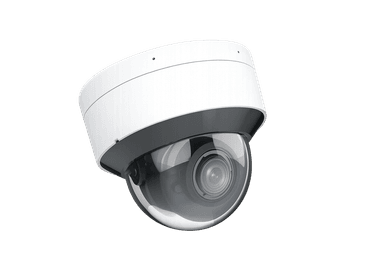
xTrack
AI shopper intelligence for footfall, heatmaps, demographics, dwell time, and conversion analytics
Learn More →The next competitive gap in retail AI is measurement. Retailers need to connect AI initiatives to the in-store indicators that show whether shoppers are entering, engaging, moving through key zones, and converting.
AI adoption is no longer the whole story
Industry signals show how quickly the conversation is moving. Coresight Research hosted its AI Tech Roadshow in New York on June 25, 2026, with discussion around agentic technology, Holiday 2026 planning, inventory accuracy, store execution, product availability, and operational planning.
NVIDIA's 2026 State of AI in Retail and CPG survey also points to broad momentum. NVIDIA reports that 91 percent of respondents are actively using or assessing AI, 89 percent say AI is helping increase annual revenue, and 95 percent say AI is helping decrease annual costs. The same survey says 47 percent of respondents are using or assessing agentic AI in their operations.
These figures are useful context, but they raise a more practical question for physical retail: where is the proof at store level?
For store operators, broad AI adoption does not answer whether a new campaign brought more shoppers through the door, whether a merchandising change improved zone engagement, whether planning improvements reduced friction during peak periods, or whether store execution changed conversion patterns.
Why physical retail needs physical proof
Retail AI often works upstream of the store. It may support demand planning, campaign timing, assortment decisions, staff scheduling, replenishment, customer segmentation, or store task prioritisation. Those decisions matter, but their impact often becomes visible only when they change real shopper behaviour.
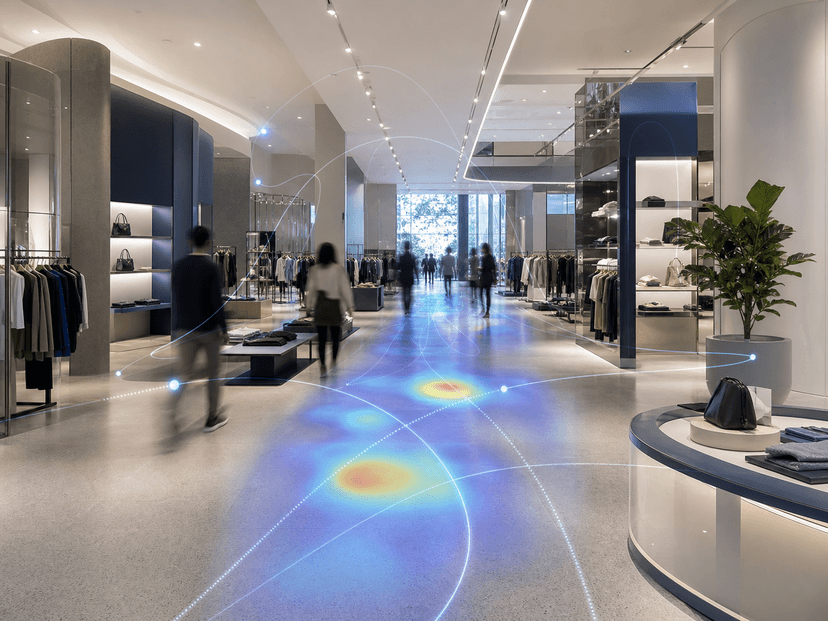
That is why store-level analytics are becoming more important. Footfall can show whether traffic changed after an AI-led campaign or planning decision. Dwell time can show whether shoppers are spending longer in priority areas. Heatmaps can reveal whether movement patterns changed around displays, entrances, fixtures, or promotion zones. Demographics and conversion signals can help teams understand whether the right shopper groups are engaging and whether visits are translating into outcomes.
These indicators should not be treated as a complete ROI model on their own. Revenue, margin, stock availability, staffing, customer experience, and operational costs still matter. But store-level analytics provide an evidence layer that broad business metrics often miss.
Without this layer, retailers may know that AI is deployed but not know what changed inside the store.
The measurement gap by location
One reason AI ROI is hard to measure in retail is that store performance is local. The same campaign, staffing model, or merchandising recommendation can behave differently across locations. A flagship store, suburban mall outlet, high-street boutique, and travel retail location may all respond differently because traffic patterns, customer mix, surrounding tenants, and execution quality differ.
This is where aggregated performance averages can hide the truth. A campaign may look successful at portfolio level while underperforming in specific stores. A merchandising change may improve engagement in one location but create congestion in another. A staff scheduling model may work on weekdays but miss weekend peaks in stores with tourism-driven footfall.
Store-level analytics help retailers compare what happened by location, time period, zone, and shopper pattern. Instead of asking only whether AI helped the business overall, teams can ask where the initiative changed store behaviour, where it did not, and what needs to be adjusted.
That is the difference between AI adoption and AI accountability.
What retailers should measure
A practical AI measurement layer should begin with the indicators closest to store behaviour.
Footfall shows whether more people entered the store during the relevant period. Passerby and capture metrics can help separate weak demand from weak storefront pull. Dwell time shows whether shoppers spent longer in key zones or moved too quickly through areas that should have created engagement. Heatmaps show whether shoppers reached priority displays, campaign zones, departments, or service areas.
Conversion analytics connect visitor volume to transactions or other store outcomes when reviewed with POS data. Demographic and audience indicators can help teams understand whether a campaign or merchandising change attracted the intended shopper segments, subject to responsible privacy and compliance review.
Queue and engagement cues can also matter. If AI improves campaign traffic but creates longer queues or congestion, the business still needs to know. Measurement should capture both opportunity and friction.
Where xTrack fits
xTrack is xRetail's AI shopper intelligence layer for physical stores. It helps retailers connect AI initiatives to in-store indicators such as footfall, dwell time, heatmaps, demographics, and conversion analytics.
The value is not in claiming that one analytics tool measures every form of AI ROI. The value is giving retail teams clearer visibility into the physical store signals that often determine whether AI-led decisions are working in practice.
For a generalised fashion and lifestyle retailer, xTrack can help compare shopper flow before and after a campaign. For a multi-store operator, it can help review whether dwell time changed in priority zones across different locations. For a retail transformation team, it can help connect digital planning initiatives to observable store behaviour.
Used with broader business data, store-level shopper intelligence can help teams move from AI enthusiasm to disciplined measurement.
Measurement makes AI easier to scale
AI pilots are easier to approve than AI operating models. Scaling requires confidence that the business can see what is working, compare results across stores, and adjust quickly when an initiative does not produce the expected behaviour.
That confidence depends on measurement. Retailers need a clear view of what changed, where it changed, and whether the change is strong enough to justify further rollout.
This is especially important in Singapore and Southeast Asia, where retailers often manage diverse store formats, dense mall environments, cross-border operations, and fast-changing campaign calendars. A single AI recommendation may need to be tested across different audiences, locations, and operating rhythms.
The retailers that build this measurement discipline early will have a clearer path from AI pilots to practical store improvement.
The next question for retail AI
The next question is not simply whether a retailer has adopted AI. Many already have, and many more are actively assessing it.
The sharper question is whether the retailer can measure what AI changes in-store.
Are more people entering the store? Are shoppers spending longer in the right zones? Are heatmap patterns changing after a campaign or layout update? Are demographics and conversion trends moving in a useful direction? Are store teams seeing the operational effect quickly enough to act?
For physical retail, AI performance should be visible where retail outcomes actually happen: on the store floor.
Measure what AI changes in-store with xTrack. www.xretails.com
Sources
Related Articles
Continue exploring insights from xRetail Solutions
Ready to Transform Your Retail Operations?
Explore how xRetail Solutions connects shopper intelligence, resilient store networks, and unified operations visibility for modern retail teams.
Contact Our Team