
AI-Powered Footfall Analytics in Retail
Retail leaders have spent years improving visibility across ecommerce, CRM, loyalty, POS, payments, and campaign performance. Online teams can see where customers came from, what they viewed, what they abandoned, and which promotions influenced a sale. Store teams, however, often still work with a much thinner picture.
In many physical retail environments, traffic is counted at the entrance, sales are tracked at the POS, staffing is planned separately, and campaign results are reviewed through broad sales movement. Each dataset may be useful on its own, but the gaps between them can hide the most important operational questions.
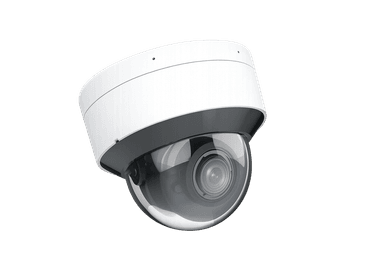
xTrack
AI shopper intelligence for footfall, heatmaps, demographics, and conversion visibility
Learn More →Did a promotion increase real store visits or only shift purchases from one product to another? Did a new fixture improve engagement or simply occupy floor space? Are queues causing potential customers to leave before purchase? Are staff schedules aligned with shopper demand by hour, zone, and store type? Are mall traffic patterns translating into store traffic, and is store traffic translating into conversion?
These are not abstract analytics questions. They affect merchandising, labour planning, customer experience, lease discussions, campaign investment, and omnichannel strategy. For APAC retailers, the pressure to answer them is increasing. Bain reported from NRF APAC 2025 that data is becoming a strategic retail driver across customer engagement, product development, trend discovery, and supplier collaboration. Colliers has also reported that Asia Pacific is leading global retail transformation, supported by omnichannel innovation and continued growth in both store-based and non-store retail sales.
The implication is clear: retail data strategy cannot stop at digital channels. If the physical store remains strategically important, store movement must become part of the enterprise data layer.
Retail data has advanced, but the store is still under-measured
Retail analytics has matured quickly across digital commerce. Marketing teams can compare channels, campaigns, audiences, and conversion paths. Ecommerce teams can review search behaviour, basket abandonment, product page performance, and fulfilment choices. Finance and operations teams can track POS results, category performance, and inventory movement.
The store floor is different. A store manager may know the sales result, but not always the traffic conditions behind it. A merchandising team may see a category underperform, but not whether shoppers reached the zone. A campaign manager may know that a promotion ran, but not whether it changed store visits, dwell time, queue pressure, or conversion patterns.
This is the store visibility gap. Physical retail generates rich behavioural signals, but many of those signals are still captured through manual observation, delayed reporting, or disconnected tools. That makes it hard for leaders to explain why store performance changed, especially across multi-store networks.
For Singapore and APAC retailers, this matters because stores remain central to retail strategy. Colliers reported that APAC is leading global retail transformation and projected growth in both store-based and non-store sales by 2028. Singapore Retail Industry Transformation Map 2025 also highlights omni-channel retail, digital-first business models, and enhanced in-store experiences as part of the sector direction.
The result is not an online-versus-offline question. It is a connected-retail question. If stores remain part of the customer journey, their movement patterns should be visible in the same operating conversation as POS, campaigns, staffing, inventory, and customer experience.
Why footfall analytics is no longer just people counting
Traditional footfall measurement was often treated as a traffic counter. It answered one question: how many people entered the store? That number still matters, but it is only the starting point.
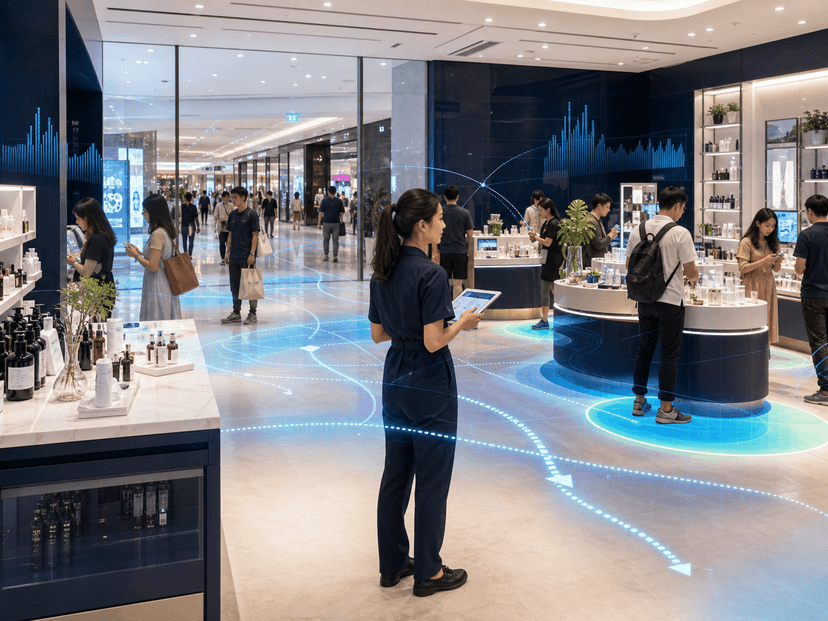
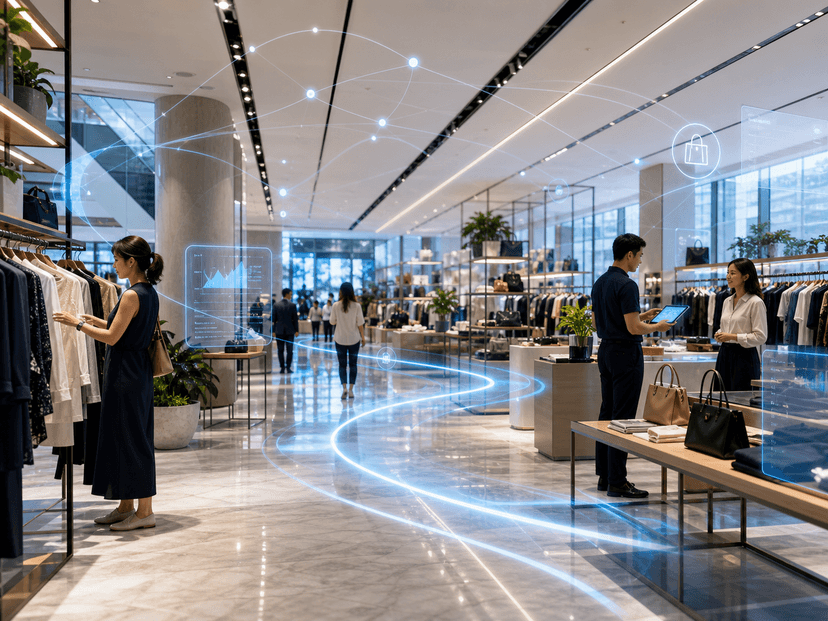
Modern AI-powered footfall analytics helps retail teams understand how people move, where they spend time, where congestion forms, which zones attract attention, and how traffic patterns relate to conversion. Instead of treating the store as a single box with an entry count and a sales total, retailers can start to analyse the store as a living operating environment.
This shift matters because retail performance is rarely explained by one metric. A store with high footfall and low sales may have a conversion issue, a staffing issue, a merchandising issue, or a mismatch between campaign promise and in-store experience. A store with moderate traffic but strong conversion may be highly efficient, but still have room to grow through better visibility, window execution, or localized marketing.
A high-traffic zone may not be profitable if shoppers dwell without purchasing. A low-traffic zone may not be failing if it serves a specific mission or high-value category. A campaign may increase visits while creating queue pressure that undermines the experience. A layout change may move shoppers through the store more smoothly but reduce engagement in a priority department.
Footfall analytics becomes valuable when it helps teams move from counting visitors to diagnosing operational patterns. The goal is not to monitor shoppers as individuals. The goal is to understand aggregate movement and behaviour so that retail leaders can make better decisions about the environment they control.
The offline data layer retail leaders need
For many retailers, the missing layer is not more data. It is connected data.
POS systems can show what was sold. Campaign platforms can show what was promoted. Loyalty systems can show who engaged after identification. Inventory systems can show stock position. Workforce systems can show who was scheduled. But without in-store movement data, leaders may struggle to understand what happened before the transaction, or why a transaction did not happen at all.
AI-powered footfall analytics fills part of that gap by creating an offline data layer for the physical store. When integrated with sales, staffing, campaign, and merchandising data, it can help retail teams interpret the difference between traffic, engagement, and conversion.
For example, a store may see strong footfall during lunch hours but weak conversion. That could indicate a browsing-heavy segment, poor queue management, insufficient staff coverage, out-of-stock items, or a promotion that attracts attention without driving purchase. Another store may show rising traffic in a specific department after a visual merchandising change, but no change in sales. That insight can help teams decide whether the display needs better product availability, stronger pricing communication, or staff support in the zone.
This is the practical value of connected footfall intelligence. It gives operations leaders a way to ask better questions. Instead of reviewing sales outcomes in isolation, they can see the operating conditions around those outcomes.
How AI changes the quality of store insight
AI does not make footfall analytics valuable because it sounds advanced. It makes the discipline more useful when it turns raw movement signals into patterns that retail teams can act on.
At a basic level, store leaders need reliable visibility into visitor volume by time, day, store, and entrance. At a more mature level, they need to understand heatmaps, dwell time, zone performance, queue pressure, demographic patterns where legally and ethically appropriate, and conversion indicators. The value is not simply in collecting these signals. It is in making them understandable to the people who manage stores, merchandising, campaigns, and technology.
AI can support this by identifying patterns across large volumes of store movement data. It can help highlight recurring traffic peaks, underused areas, unusual changes in shopper flow, and relationships between movement and sales performance. For multi-store retailers, AI-supported analytics can also make benchmarking more practical. Leaders can compare similar store formats, detect outliers, and separate local context from execution gaps.
This is where xTrack fits into the conversation. xTrack is positioned as AI shopper intelligence for physical retail, covering footfall, heatmaps, demographics, and conversion visibility. In a modern retail data strategy, a platform like xTrack should not be viewed as a standalone counter. It should be evaluated as part of the operating intelligence layer that helps physical stores participate in the same data-driven decision-making already expected in digital commerce.
What retail teams can do with connected footfall intelligence
The strongest use cases for AI-powered footfall analytics are practical. They help teams improve decisions they already make, rather than creating a separate analytics project with no operational owner.
Store operations teams can use footfall and conversion patterns to review staffing coverage. If the store receives heavy traffic during specific time windows, but conversion falls or queues build, the issue may be less about demand and more about service capacity. If traffic is light but staff coverage is high, leaders can review whether schedules match actual demand. The output should not be a simplistic rule to add or cut labour. It should be better evidence for matching service levels to customer flow.
Merchandising teams can use heatmaps and dwell time to understand how shoppers interact with product zones, displays, and store layouts. A display that attracts traffic but does not support conversion may need clearer messaging, better product adjacency, or improved stock availability. A low-engagement zone may need layout changes, stronger category storytelling, or a rethink of its role in the customer journey.
Marketing teams can connect campaigns to store movement. A campaign that increases online clicks but does not increase store traffic may need stronger location relevance or clearer store-level offers. A campaign that drives traffic without conversion may indicate a disconnect between the message and the in-store experience. With better footfall visibility, marketers can evaluate physical impact, not just digital engagement.
IT leaders can use footfall analytics as part of a broader data architecture discussion. The question is not only which sensor or dashboard to buy. It is how store analytics should connect with POS, reporting, workforce, inventory, and executive visibility. For retailers operating across Singapore and APAC, this also includes questions of scalability, network resilience, privacy governance, and operational support across different store environments.
Executives can use aggregated footfall intelligence to improve strategic planning. Store performance can be reviewed through a richer lens than revenue alone. Leaders can compare traffic quality, conversion opportunities, format performance, campaign response, and customer experience constraints. This is especially important as retailers balance ecommerce growth with the continued role of stores in discovery, service, fulfilment, and brand experience.
Implementation considerations for Singapore and APAC retailers
Retail analytics should be implemented with discipline. The technology is only useful if the business has clear questions, trusted data practices, and accountable owners.
First, define the decisions the analytics will support. A retailer may want to improve conversion visibility, understand queue pressure, benchmark store formats, measure campaign impact, or refine staff planning. These goals should guide the deployment, dashboard design, and integration priorities.
Second, connect footfall data to operating rhythms. Store managers, area managers, merchandising teams, and executives need different views. A store manager may need daily traffic and conversion patterns. A merchandising team may need zone-level engagement. An executive team may need multi-store trends and exceptions. If the insight does not match the workflow, adoption will suffer.
Third, treat privacy and governance as design requirements from the start. Singapore PDPC guidance confirms that organisations using personal data in AI recommendation or decision systems must consider PDPA obligations, transparency, and appropriate safeguards. PDPC selected-topic guidance also encourages the use of anonymised data where possible for analytics and research, because anonymised data is not personal data under the PDPA. Retailers should work with legal, compliance, and technology teams to define appropriate data handling, notices, access controls, and retention practices.
Fourth, avoid unsupported performance claims. Footfall analytics can help teams make better decisions, but each retailer outcome depends on store format, execution quality, integration depth, team adoption, and market context. Claims about sales uplift, labour savings, conversion improvement, or queue reduction should be used only when supported by documented evidence from the relevant deployment.
Fifth, plan for integration. The biggest value comes when footfall data is not trapped in a separate dashboard. Retailers should consider how shopper movement insights can connect with POS, staffing, campaigns, inventory, and unified operations reporting. This is also where Vortex Cloud can play a complementary role as a unified operations dashboard, helping leaders bring multiple operational signals into a more coherent view.
The future of retail analytics is connected, not channel-specific
APAC retail is not moving toward a simple online-versus-offline model. The stronger direction is connected retail, where stores, digital channels, fulfilment, loyalty, and operations work together. Colliers has reported projected growth in both store-based and non-store retail sales in APAC by 2028, supporting the need for visibility across both environments. Singapore Retail Industry Transformation Map 2025 also highlights omni-channel retail, digital-first business models, and enhanced in-store experiences as part of the sector transformation agenda.
This makes footfall analytics a strategic capability, not just a facilities metric. Store traffic is one of the clearest signals of offline demand, but it becomes much more powerful when linked to what shoppers do next. Did they enter? Where did they go? Did they dwell? Did they queue? Did they buy? Did the store experience support the promise made online?
For retail executives, the opportunity is to close the visibility gap between digital commerce and physical retail. Ecommerce teams have long worked with journey analytics. Physical store teams deserve the same level of operational intelligence, adapted to the realities of in-store behaviour, privacy expectations, and store execution.
The practical test is simple. If leaders can explain online performance by campaign, channel, audience, and journey stage, they should also be able to explain store performance by traffic quality, zone engagement, service capacity, and conversion context. Without that layer, physical retail decisions remain more dependent on observation, anecdote, and delayed sales reporting than they need to be.
AI-powered footfall analytics will not replace retail judgment. It gives leaders better evidence for that judgment. It helps teams see the store as a measurable environment where traffic, layout, staffing, merchandising, and campaigns interact. For retailers in Singapore and APAC, that visibility can become an important foundation for more resilient, efficient, and customer-aware operations.
The missing piece in retail data strategy is not another isolated dashboard. It is the ability to connect shopper movement with the decisions that shape store performance. That is where AI-powered footfall analytics moves from counting visitors to powering retail intelligence.
FAQ
Q: What is AI-powered footfall analytics?
A: AI-powered footfall analytics uses in-store movement signals to help retailers understand visitor traffic, heatmaps, dwell time, zone engagement, queue pressure, and conversion patterns. The focus is aggregate shopper intelligence for store operations, not individual shopper tracking.
Q: Why is footfall analytics important for retail data strategy?
A: Footfall analytics helps connect the physical store to broader retail data. When combined with POS, staffing, campaign, loyalty, and inventory data, it gives leaders a clearer view of how traffic becomes engagement and how engagement becomes sales.
Q: How can retailers use footfall analytics without making unsupported ROI claims?
A: Retailers should use footfall analytics to improve decision quality and measure outcomes in their own environment. Any claim about conversion uplift, sales improvement, labour savings, or queue reduction should be backed by documented evidence from the relevant deployment.
Q: What should Singapore retailers consider before deploying AI retail analytics?
A: Singapore retailers should define the decisions the system will support, align dashboards to team workflows, plan integration with existing systems, and review PDPA obligations, transparency, safeguards, and anonymisation practices with legal and compliance teams.
Q: How does xTrack fit into this topic?
A: xTrack provides AI shopper intelligence for physical retail, including footfall, heatmaps, demographics, and conversion visibility. It can help retail teams move beyond basic traffic counting toward more connected store operations insight.
See how xTrack turns in-store movement into actionable shopper intelligence for store operations, merchandising, and omnichannel teams.
Sources
- Bain: NRF APAC 2025 - Data Is Redefining Retail
- Colliers: Asia Pacific global retail trends 2025/2026 outlook
- SIRS: Retail Industry Transformation Map 2025
- Market Research Future: Retail Analytics Market Size, Trends, Global Report 2035
- DataIntelo: Footfall Counter Market Research Report 2034
- PDPC: Advisory Guidelines on the Use of Personal Data in AI Recommendation and Decision Systems
- PDPC: Advisory Guidelines on the PDPA for Selected Topics, revised May 2024
Related Articles
Continue exploring insights from xRetail Solutions
Ready to Transform Your Retail Operations?
Explore how xRetail Solutions connects shopper intelligence, resilient store networks, and unified operations visibility for modern retail teams.
Contact Our Team