
How AI Is Bridging the Gap Between Online and In-Store Retail Experiences
For years, retail transformation was often framed as a contest between ecommerce and the physical store. That framing is now too simple. Online channels continue to shape discovery, comparison, payment behaviour, and customer expectations. At the same time, stores remain central to product exploration, fulfilment, service, returns, and trust.
Forrester projects that US ecommerce will reach US$1.8 trillion by 2030, representing 29 percent of total retail sales. The other side of that projection is just as important: 71 percent of retail sales would still come through stores. For retail leaders, the conclusion is not that one channel replaces the other. The next challenge is making both channels work as one operating system.

Vortex Cloud
Unified operations visibility for store intelligence, network resilience, device health, and retail operations teams
Learn More →AI can help bridge the online and in-store gap, but only when it sits on top of strong operational foundations. Retailers need accurate inventory data, reliable connectivity, store-level visibility, clear workflows, and dashboards that help teams act quickly.
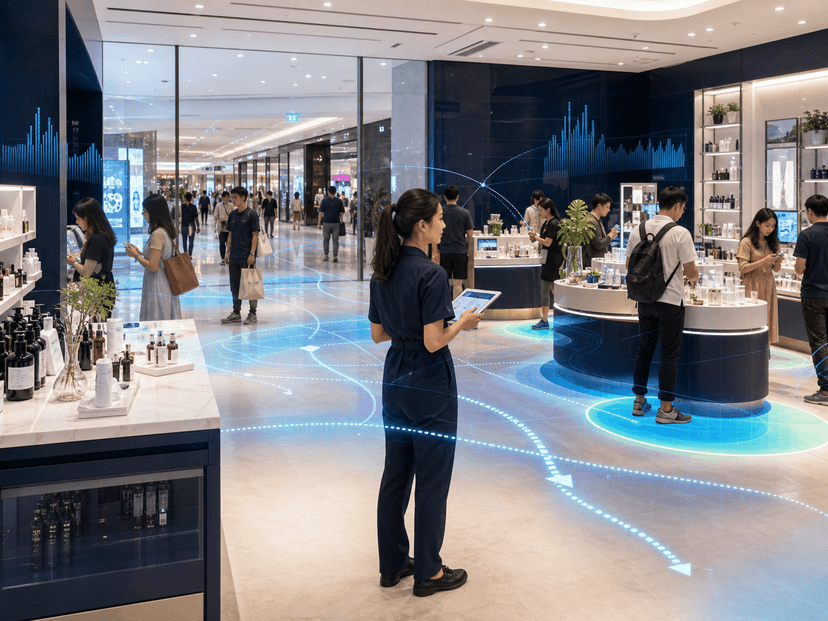
The strongest retail AI use cases are not about replacing store teams or turning every store into a futuristic showroom. They are about connecting online intent with in-store execution: whether an item is available, where shoppers move, what associates need to know, which stores need support, and whether the network can keep critical systems running.
The store is not disappearing. It is becoming more connected
Customers do not think in channels. They discover a product through search, social content, marketplaces, messaging, or video commerce. They may check availability online, visit a store to compare options, ask an associate for advice, buy through a mobile wallet, and later return or exchange through another touchpoint.
Retail operations, however, are often still organised around separate systems. Ecommerce platforms, point-of-sale systems, inventory records, store traffic data, network infrastructure, and reporting dashboards may not speak to each other in real time. That creates gaps that customers feel directly.
A shopper may see a product online but arrive in-store to find that it is unavailable. A store may experience high traffic but lack the visibility to adjust staffing or merchandising quickly. A campaign may drive online interest, but store teams may not have the operational context to support the demand. A network issue may interrupt payments, digital signage, POS, or inventory checks at the exact moment when service quality matters most.
McKinsey reports that 37 percent of surveyed consumers ranked in-stock reliability among their top three reasons for choosing a retailer. This reinforces a point many retail leaders already know: omnichannel experience is not only a digital interface problem. It is an operations problem.
The operating model for AI-enabled omnichannel retail
Retail AI is gaining momentum, but maturity is uneven. NRF surveyed 56 AI leaders at US-based retailers for its Retail AI Trends 2025 report and found that 66 percent said their companies had implemented or were implementing AI for customer personalisation in marketing. The same report found that 57 percent had implemented or were implementing AI for associate support tools, while 59 percent were preparing to implement or researching AI for supply-chain operations.
Those figures point to a shift from experimentation to operationalisation. Retailers are moving beyond isolated AI pilots and asking where AI can improve daily decisions across stores, teams, inventory, and customer engagement.
A practical operating model has five layers: inventory visibility accurate enough to support customer promises, in-store shopper intelligence, associate enablement, resilient connectivity, and unified dashboards that turn operational data into decisions.
This is the bridge between online and in-store retail. It is not a single AI feature. It is a connected operating model.
1. Build inventory visibility into the customer promise
Inventory is one of the clearest links between online intent and store execution. When customers check stock online, reserve products, choose click-and-collect, or visit a store after seeing a product digitally, the accuracy of inventory data shapes the experience.
Deloitte reports that 30 percent of surveyed retail executives currently use AI for supply-chain visibility, with that expected to rise to 41 percent within the next year. Deloitte also reports that 59 percent expect positive ROI from AI-driven supply-chain initiatives within 12 months.
These findings do not mean AI alone solves inventory accuracy. They do show that retailers increasingly see supply-chain and inventory visibility as a high-value AI use case. The reason is simple: customer-facing promises depend on operational truth.
For store leaders, better inventory visibility supports more confident fulfilment, fewer inconsistent experiences, and better decisions around replenishment and store-level execution. For technology leaders, it means connecting inventory systems, POS data, order management, and analytics in a way that reduces blind spots.
Deloitte Digital describes unified commerce as a single interconnected platform coordinating inventory management, order management, and merchandise planning. That direction matters because the customer experience is only as reliable as the data behind it.
2. Use shopper intelligence to understand in-store behaviour
Online retail has trained teams to measure journeys closely: clicks, searches, baskets, conversion, drop-off, and repeat behaviour. Physical retail has often had less visibility. Store teams may know sales results, but not always how many people entered, where they moved, which zones attracted attention, or where conversion opportunities were lost.
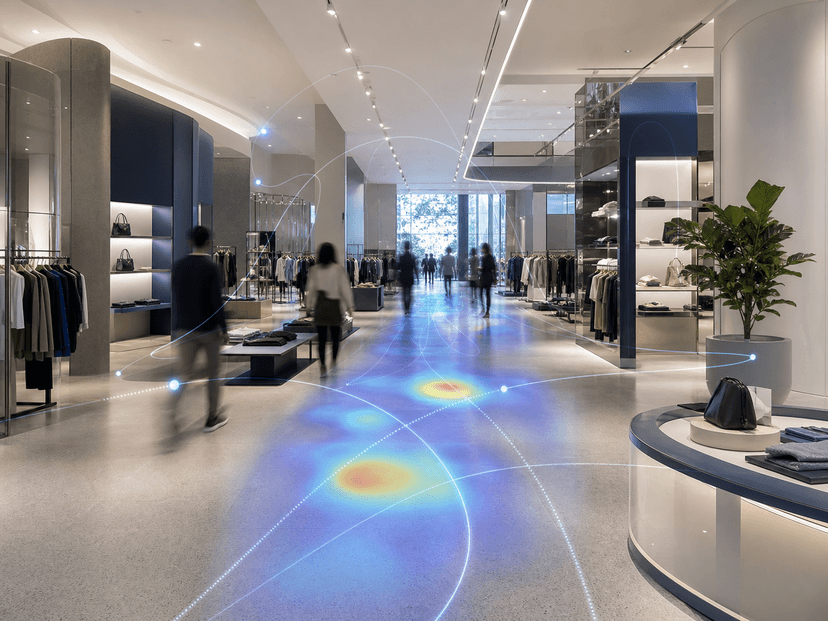
AI-enabled shopper intelligence helps close that measurement gap. Footfall analytics, heatmaps, demographic signals, and conversion indicators can help retailers understand how online demand translates into physical store behaviour.
For example, a campaign may increase store visits but not sales. Without in-store analytics, the team may only see the final transaction result. With better visibility, they can investigate whether traffic concentrated in certain zones, whether product placement supported the campaign, whether staffing matched peak periods, or whether the offer created interest without enough stock availability.
xTrack supports this kind of store visibility through AI shopper intelligence, including footfall, heatmaps, demographics, and conversion. The value is not in collecting data for its own sake. The value is helping retail teams make store decisions with more evidence: layout adjustments, staffing conversations, merchandising reviews, and campaign follow-through.
3. Equip store teams with better operational context
AI is often discussed at the executive or customer-facing layer, but one of its most practical roles is associate enablement. Store teams are expected to support customers who may already know pricing, product information, reviews, and alternatives before they enter the store. That raises the bar for service.
NRF found that 57 percent of surveyed retail AI leaders had implemented or were implementing AI for associate support tools. This matters because the store associate is often the human bridge between online intent and in-store experience.
The goal is not to overload associates with dashboards. It is to provide useful context at the right moment. That may include stock visibility, task prioritisation, service alerts, product information, or operational signals from store systems. Done well, AI can help teams respond faster and more consistently.
Retailers should be careful not to treat associate enablement as a software deployment alone. Adoption depends on workflow design, training, governance, and clear accountability. Store teams need to trust the information they receive. Managers need to know which signals require action. Technology teams need to ensure the data is timely and reliable.
4. Treat connectivity as part of the customer experience
The more connected a store becomes, the more dependent it is on reliable connectivity. POS terminals, payment systems, inventory lookups, digital signage, IoT devices, cloud dashboards, mobile devices, and customer engagement tools all depend on network availability.
This is where omnichannel strategy often meets operational reality. A retailer can invest in AI, unified commerce, and digital store systems, but if store connectivity is fragile, the customer experience can still break down.
Network resilience should therefore be treated as part of the retail experience architecture. It is not only an IT concern. It affects payment continuity, associate productivity, fulfilment workflows, and management visibility.
xPilot 3 Pro supports this layer as a 5G failover gateway designed for network resilience and remote management. The role of this kind of infrastructure is to help retail teams maintain operational continuity across connected store environments. Any claims about specific downtime reduction or financial impact would require internal proof, but the strategic point is clear: stores cannot become more intelligent if they are not reliably connected.
5. Unify retail data into dashboards teams can act on
AI becomes more useful when retail teams can see the right signals together. If shopper movement, inventory status, device health, connectivity, and store performance sit in separate systems, leaders may still struggle to make timely decisions.
Unified dashboards help move retail operations from fragmented reporting to coordinated action. They give headquarters and store teams a shared view of what is happening across locations, systems, and operational priorities.
Vortex Cloud supports this need as a unified operations dashboard for retail environments. In an AI-enabled retail model, dashboards are not simply reporting screens. They become a management layer where teams can monitor store conditions, identify exceptions, and coordinate responses.
The most effective dashboards are not the most crowded. They are the ones that make decisions clearer. Retail leaders should ask which metrics require daily attention, which alerts require immediate action, which trends should trigger a review, and which data should be visible to store managers, operations leaders, and technology teams.
What this means for Singapore and Southeast Asia retailers
The Southeast Asia context makes the online-to-store bridge especially important. Google, Temasek, and Bain report that Southeast Asia digital economy is set to surpass US$300 billion in gross merchandise value by 2025, with revenues forecast at US$135 billion. They also report that three in five people in the region now shop online and that more than 60 percent of payments are digital.
The same e-Conomy SEA 2025 summary reports that video commerce is expected to account for 25 percent of total ecommerce GMV by 2025. This is important because digital discovery is becoming more dynamic, content-led, and mobile-first. A shopper may be influenced by video content, compare products online, then visit a physical store with a clearer intent to evaluate, collect, or complete a purchase.
In Singapore, IMDA has highlighted the role of AI in helping retailers serve omnichannel shoppers. IMDA states that omnichannel retail accounted for more than half of retail expenditure in 2022 and is projected to surge by 21.2 percent by 2026. This should be treated as Singapore-specific context rather than a universal claim, but it reinforces the direction of travel.
For retailers in Singapore and Southeast Asia, the opportunity is not simply to digitise the front end. It is to connect the operational back end with the customer journey. That includes store analytics, inventory accuracy, reliable connectivity, dashboard visibility, and disciplined workflows.
From channel strategy to operational readiness
Retailers are entering a phase where AI ambition must be matched by operational readiness. Bain and VusionGroup report that 75 percent of retail executives plan a large-scale store transformation within the next two years, and 44 percent expect these investments to improve the bottom line by more than 1.5 percentage points. Those figures show confidence in the store as a connected, technology-enabled space, while still requiring careful validation by each retailer business case.
The practical question for retail leaders is not whether AI belongs in retail. It is where AI can make the physical store more measurable, responsive, and connected to online demand.
The answer starts with grounded priorities: make inventory data reliable enough to support customer-facing promises, measure in-store behaviour with the same seriousness applied to digital journeys, give store teams operational context they can actually use, build network resilience into the store technology stack, and use unified dashboards to turn fragmented data into coordinated action.
AI is not replacing the store. It is making the store easier to understand, manage, and connect to the rest of the retail journey. For operations and technology leaders, that is the real bridge between online and in-store experiences.
xRetail Solutions supports this direction by helping retail teams connect store visibility, network resilience, and operations data across modern retail environments. xTrack provides AI shopper intelligence for footfall, heatmaps, demographics, and conversion. xPilot 3 Pro supports network resilience through 5G failover and remote management. Vortex Cloud provides a unified operations dashboard for connected retail environments.
The retailers that move fastest will not be the ones that treat AI as a standalone initiative. They will be the ones that use AI to strengthen the operational foundations that customers already experience every day: availability, service, speed, reliability, and consistency across channels.
FAQ
Q: How is AI helping retailers connect online and in-store experiences?
A: AI helps retailers connect online and in-store experiences by improving inventory visibility, analysing shopper behaviour in physical stores, supporting associates with better context, monitoring connected store systems, and helping teams act through unified dashboards.
Q: Why does inventory visibility matter for omnichannel retail?
A: Inventory visibility matters because customers often make decisions based on what they see online before visiting a store. If stock data is inaccurate, the customer experience can break down even when the digital journey looks polished.
Q: Is AI replacing physical stores?
A: No. The stronger retail trend is that AI is making stores more connected, measurable, and responsive. Stores remain important for service, fulfilment, discovery, returns, and customer trust.
Q: What should retailers prioritise before scaling AI in stores?
A: Retailers should prioritise accurate data, reliable connectivity, store-level analytics, clear workflows, team adoption, and governance. AI works best when it is built on operational foundations that teams can trust.
Q: How can Singapore and Southeast Asia retailers approach AI in omnichannel operations?
A: Retailers in the region should focus on connecting digital discovery with store execution. This includes understanding in-store shopper behaviour, maintaining reliable store systems, improving inventory accuracy, and using dashboards to coordinate operations across locations.
Explore how xRetail Solutions helps retail teams connect store visibility, network resilience, and operations data across modern retail environments.
Sources
- Deloitte: 2026 Retail Industry Global Outlook
- McKinsey: Shopping in the age of AI
- NRF: Retail AI Trends 2025
- Deloitte Digital: How unified commerce is transforming retail
- Forrester: US Retail In 2030
- Google, Temasek, and Bain: e-Conomy SEA 2025
- Bain and VusionGroup: The store strikes back as a connected, AI-powered space
- IMDA: AI bridges the gap between Singapore retailers and omnichannel shoppers
Related Articles
Continue exploring insights from xRetail Solutions
Ready to Transform Your Retail Operations?
Explore how xRetail Solutions connects shopper intelligence, resilient store networks, and unified operations visibility for modern retail teams.
Contact Our Team