
The Future of Retail Operations: How AI and Real-Time Analytics Transform Store Management
Retail stores are no longer just sales channels. They are service hubs, fulfilment points, brand experience spaces, data sources, and operational pressure points all at once.
For retail leaders in Singapore and across APAC, this creates a practical challenge. Store teams are expected to serve customers better, manage leaner staffing models, support omnichannel journeys, keep shelves and service areas moving, and respond quickly when something goes wrong. Yet many decisions are still made with delayed reports, manual observation, fragmented systems, or assumptions from the shop floor.
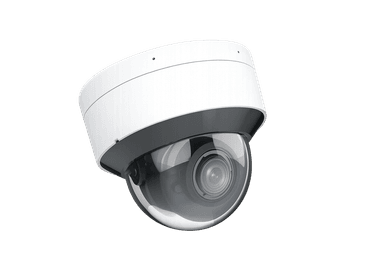
xTrack
AI shopper intelligence for footfall, heatmaps, demographics, queue visibility, and conversion analytics
Learn More →The strongest use case for AI is not replacing store teams. It is giving them a clearer operating layer: a way to see shopper movement, queue pressure, conversion gaps, underperforming zones, staffing needs, inventory signals, and connectivity issues before they become daily firefighting.
In this sense, the physical store is starting to behave more like a real-time operating system. The question for retailers is whether their data, dashboards, and networks are ready to support that shift.
The store operations visibility gap
Most retail organizations already collect data. Point-of-sale systems show transactions. Ecommerce platforms show online browsing and conversion. Loyalty systems show customer history. Inventory platforms show stock movement. Workforce systems show schedules.
But the store itself often remains the least visible part of the journey.
Retail leaders may know how much a location sold yesterday, but not how many shoppers entered, where they spent time, what areas they ignored, whether queues formed during peak periods, or whether a display attracted attention without converting. A store manager may notice these patterns from experience, but the insight is often local, manual, and hard to scale across a network.
This matters because store operations depend on timing. A staffing issue at 2pm cannot wait for a weekly report. A high-traffic zone that fails to convert needs investigation while the promotion is still active. A network outage that interrupts payments or cloud dashboards needs escalation before customer experience suffers.
Traditional reporting is useful for review. Real-time analytics is useful for response.
Why real-time analytics matters now
The timing is especially relevant for Singapore retailers. Enterprise Singapore and IMDA launched a refreshed Retail Industry Digital Plan on 26 May 2026 to guide more than 2,000 SME retailers on digital transformation. Enterprise Singapore also positioned the refreshed roadmap and Retail Accelerator as ways to help retailers address immediate pressures, build resilience, and position for future growth.
That policy direction reflects a broader reality: retail transformation is becoming less about isolated technology adoption and more about operational capability. Retailers need better ways to connect store-level data, online signals, customer expectations, inventory decisions, and workforce planning.
Global retail research points in the same direction. Honeywell reported that 85 percent of surveyed large retail executives had developed AI capabilities and solutions, with 60 percent actively expanding them. At the same time, 46 percent described data capture as only somewhat or a bit automated. That contrast is important. AI ambitions are rising, but many retailers still need more reliable, timely, and connected operational data.
Deloitte has reported growing AI use for supply chain visibility, while Infosys argues that disconnected omnichannel data and limited operating model change continue to hold back AI value in retail.
The lesson for store operations is straightforward. AI is only useful when it can work with relevant signals at the right speed. For physical retail, that means the operating layer must include what is happening on the shop floor.
Five store workflows AI can improve
1. Footfall and traffic patterns
Footfall is one of the most basic store signals, but it becomes more valuable when it is timely, segmented, and connected to other metrics.
Real-time footfall analytics can help teams understand when shoppers enter, how traffic changes by hour or day, which locations are building momentum, and where demand is weaker than expected. When combined with conversion data, footfall can also help distinguish between a traffic problem and an execution problem.
For example, a store with high traffic but weak sales may need attention on product mix, staffing, queue management, merchandising, or checkout experience. A store with low traffic but strong conversion may need marketing support or local activation. The data does not make the decision by itself, but it helps managers ask better questions sooner.
2. Heatmaps and in-store movement
Heatmap analytics help retailers understand how shoppers move through a store, where they dwell, and which zones receive less attention.
This is useful because store layouts are often designed with assumptions that may not match actual behavior. A premium display might be placed in a visually attractive area but receive limited traffic. A promotion might attract shoppers but fail to move them toward purchase. A category might be underperforming because of visibility, not demand.
AI-powered shopper intelligence can turn movement patterns into practical insights for merchandising, space planning, and campaign review. It can help teams test whether endcaps, seasonal displays, service counters, or high-margin categories are located in the right places.
The goal is not to optimize every square metre. It is to give retail teams evidence for decisions that used to rely heavily on manual observation.
3. Staffing and service pressure
Store staffing is one of the most sensitive operational decisions. Too few staff can lead to long waits, missed sales opportunities, and weaker service. Too many staff can add cost without improving the customer experience.
Real-time analytics can help managers see traffic peaks, dwell patterns, queue pressure, and service demand more clearly. This can support better roster planning, break timing, floor coverage, and escalation during busy periods.
For APAC retailers managing multiple formats, this visibility becomes especially useful across store networks. A flagship outlet, neighborhood store, travel retail location, and mall kiosk may all have different traffic patterns. A centralized view helps operations leaders compare conditions and support stores without waiting for manual updates.
4. Inventory and merchandising signals
AI analytics does not replace inventory management systems. But store-level behavior data can add context that inventory systems may not capture.
If shoppers repeatedly visit a category zone but sales remain weak, the issue may be pricing, availability, product presentation, or staff engagement. If traffic rises around a display but conversion does not follow, merchandising teams may need to review the offer. If a store sees stronger interest in a category during specific periods, local replenishment and campaign planning can become more precise.
This is where physical and digital signals should work together. Ecommerce data may show search intent. Store analytics may show movement and dwell. POS data shows purchase. Inventory systems show availability. When those signals remain disconnected, retailers see fragments. When they are connected, teams can diagnose performance with more confidence.
5. Omnichannel service and customer experience
Modern retail journeys rarely stay in one channel. Customers may discover online, compare in-store, buy through a mobile channel, collect at a physical location, and return or exchange later.
This makes the store a critical part of the omnichannel experience. Real-time analytics can help operations teams understand whether stores are ready to support that role. Are pickup counters receiving too much pressure during peak periods? Are staff being pulled away from shoppers to handle fulfilment tasks? Are certain locations showing traffic patterns that suggest stronger assisted-selling opportunities?
AI can help surface these operational patterns earlier. It can also help headquarters see where stores need support, instead of relying only on after-the-fact sales reports or anecdotal feedback.
Why connectivity and centralized dashboards matter
Real-time analytics depends on more than sensors, cameras, or AI models. It also depends on reliable connectivity and usable dashboards.
If a store network is unstable, analytics systems may lose timeliness. If data sits in separate tools, leaders may struggle to act on it. If dashboards are too complex, store teams may ignore them during busy periods.
This is why the operating layer matters. Retailers need a way to bring shopper intelligence, store performance, device status, network visibility, and operational alerts into a practical workflow.
For xRetail, this is where the product portfolio can be positioned as complementary capabilities.
xTrack supports AI shopper intelligence across footfall, heatmaps, demographics, and conversion visibility. It helps retailers better understand what is happening inside the store and where attention may be needed.
Vortex Cloud provides a unified operations dashboard, helping teams centralize store visibility instead of working across disconnected views.
xPilot 3 Pro supports network resilience through 5G failover and remote management, helping reduce connectivity risk for store systems that depend on reliable access.
These capabilities should be viewed as enablers, not guaranteed business outcomes. The value depends on store context, data quality, operating discipline, and how teams use the insights.
How to deploy AI responsibly without hype
Retail AI deployment should be practical, transparent, and measurable.
First, start with operational questions, not technology categories. A useful AI project begins with questions such as: Where are queues forming? Which zones attract traffic but do not convert? Which stores need support during peak hours? Which locations have recurring network issues? Which dashboards does a store manager need before opening, during the day, and after closing?
Second, prioritize data quality and integration. If footfall, POS, inventory, workforce, and online data remain disconnected, AI may produce partial insights. Retailers should identify which signals matter most and build from there.
Third, design for store teams. A dashboard that works for headquarters may not work for a store manager on a busy Saturday. Insights should be simple, timely, and linked to action.
Fourth, manage trust and governance. Honeywell reported that top AI rollout concerns included model complexity, regulatory compliance, customer acceptance, workforce adaptation, security risk, and vendor trust. These concerns are not barriers to progress, but they need to be addressed directly.
Finally, measure learning before promising transformation. Retailers can begin with specific use cases such as traffic visibility, queue monitoring, promotional zone analysis, or store connectivity alerts. Over time, these use cases can form a stronger operating layer across the store network.
The store as a real-time operating layer
Retail leaders have spent years improving digital channels, ecommerce journeys, and customer data platforms. The next opportunity is to bring the same level of visibility and responsiveness into physical stores.
The store still matters. It is where customers experience the brand, interact with staff, test products, collect orders, resolve issues, and make decisions. But to manage stores effectively in a faster retail environment, teams need more than historical sales data.
They need to see what is happening now.
AI-powered real-time analytics can help retailers move from delayed reporting to active operations. It can show where shoppers go, where service pressure builds, where conversion gaps appear, where inventory questions emerge, and where network reliability may affect store systems.
For Singapore and APAC retailers, this is not about chasing AI hype. It is about building stores that are more visible, resilient, and responsive.
The retailers that benefit most will not be the ones with the most dashboards. They will be the ones that turn real-time signals into better daily decisions.
FAQ
Q: What is AI-powered real-time analytics in retail?
A: AI-powered real-time analytics in retail refers to systems that collect, process, and interpret store signals such as footfall, shopper movement, queues, conversion patterns, and operational alerts while they are still actionable. The purpose is to help retail teams respond faster and make better decisions.
Q: How can real-time analytics help store managers?
A: It can help store managers understand traffic peaks, queue pressure, underperforming zones, staffing needs, and store execution gaps. Instead of waiting for end-of-day reports, managers can act while conditions are still unfolding.
Q: Does AI replace retail store teams?
A: No. A practical retail AI strategy should support store teams, not replace them. AI can help surface patterns and alerts, but people still make the operational, service, merchandising, and customer experience decisions.
Q: Why is connectivity important for retail analytics?
A: Real-time analytics depends on reliable data flow. If store connectivity is unstable, dashboards, alerts, payment systems, and cloud-based tools may lose timeliness. Network resilience helps reduce operational risk.
Q: How does xRetail support real-time store operations?
A: xRetail supports real-time store operations through xTrack for AI shopper intelligence, Vortex Cloud for centralized operational visibility, and xPilot 3 Pro for 5G failover and remote management. These capabilities help retailers improve visibility across shopper behavior, store performance, and connectivity risk.
Explore how xRetail helps store teams turn shopper movement, store performance, and operational signals into real-time decisions.
Sources
- Enterprise Singapore and IMDA: Refreshed Retail Industry Digital Plan, May 2026
- Enterprise Singapore: Retail transformation initiatives, May 2026
- Honeywell: The Impact of AI and Data Collection on Retail Transformation
- Deloitte: 2026 Retail Industry Global Outlook
- Infosys Knowledge Institute: AI in Retail Business Value Radar 2025
Related Articles
Continue exploring insights from xRetail Solutions
Ready to Transform Your Retail Operations?
Explore how xRetail Solutions connects shopper intelligence, resilient store networks, and unified operations visibility for modern retail teams.
Contact Our Team